Cero®
Inspired by the invisible impact of everyday waste, Cero transforms unseen habits into conscious actions, blending real-time insight with gentle nudges to help families live lighter, one small choice at a time.
From waste to awareness
It imagines a smart waste ecosystem designed for modern homes. By combining camera vision, weight sensors, and a beautifully intuitive app, Cero turns everyday trash into a story of growth, much like tracking your steps or spending. Through habit loops, eco-feedback, and small celebrations, it encourages behavior change from the inside out.
We’re not just counting pounds of waste, we’re creating new rituals that feel as satisfying as they are sustainable.
Built on Clarity, Control, Care & Cycle.
Designing for everyday awareness
Most waste disappears the moment it hits the bin, out of sight, out of mind. But what if you could see what you throw away? Understand what it adds up to? That was the idea behind Cero: make waste visible, trackable, and actionable.
As the product designer, my challenge wasn’t just to visualize, it was to design an experience that reshaped behavior without friction or shame. The goal was to build clarity, offer control, and foster care, all through small loops of reflection and gentle encouragement.
What does it feel like to throw something away?
Before any UI, I started with emotion. What does it feel like to drop a banana peel into the bin and see it registered as “organic waste”? What would motivate someone to return, reflect, and reduce without feeling judged?
These led the UX exploration:
- How do I make invisible actions feel acknowledged?
- How do I balance data and delight?
- How do I create a loop that builds on itself?
I storyboarded the disposal flow: from tossing scraps to reviewing them in the app. I explored how feedback, visual, emotional, even haptic, could reinforce awareness without guilt.
This led to:
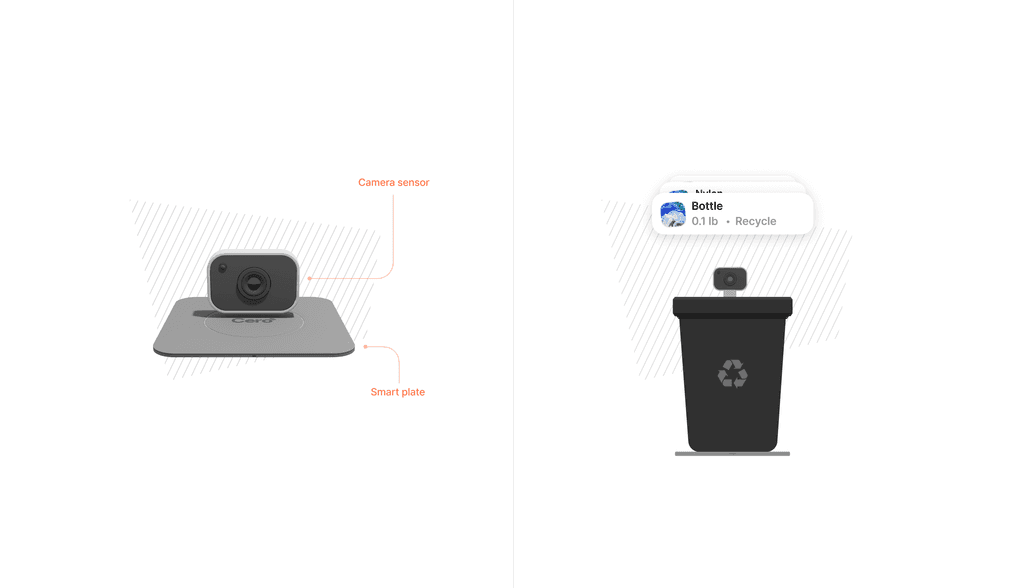
- Camera-based auto-detection paired with smart plate weight measurement
- A daily waste log that feels more like a habit tracker than a trash report
- Celebratory micro-moments when users reduce landfill or hit a compost goal
Turning feedback into feeling
Charts alone don’t change behavior. But subtle copy like “Most of your waste this week was food—try meal planning?” can create pause and intention.
Cero included:
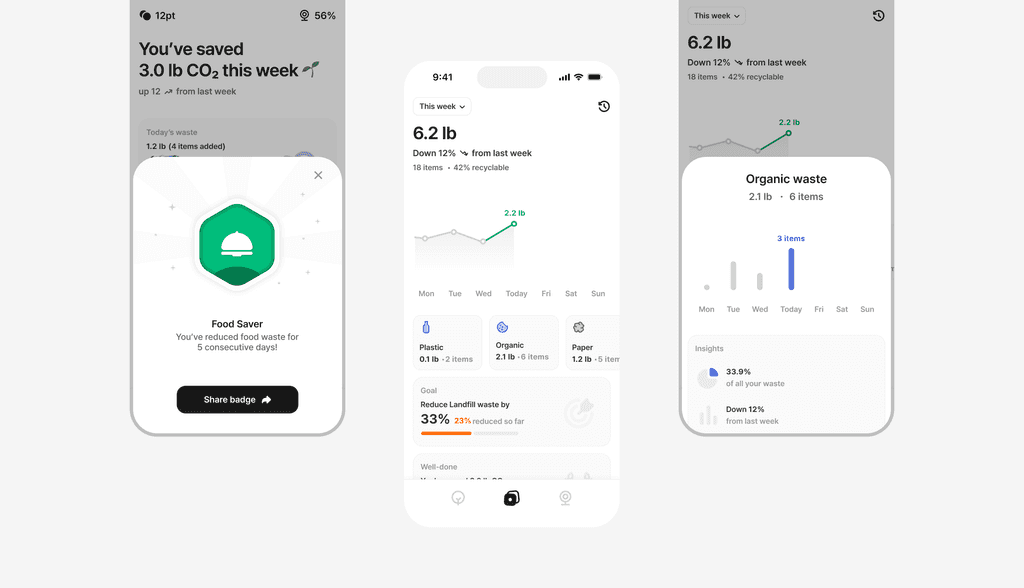
- A dynamic insights page with weekly summaries
- Badges and goal tracking to reinforce continuity
- A categorization breakdown with time-stamped, categorized entry details
Designing for calm trust
Visually, Cero needed to be soft, present, and respectful. Not loud. Not preachy. Just there to help.
Typography, iconography, and color were all chosen to support a calm mental space. The app feels like a mindful companion—offering insight, not stress.
Micro-interactions guide the user gently. Swipe a card, reveal a nudge, watch a streak build. Every detail asks: does this make someone feel aware, not ashamed?
Metrics: measuring success
As a product, Cero’s success would be defined not just by what it captures, but by how it changes behavior and builds lasting rituals. Here are the signals we imagined to evaluate its impact:
- Behavior Change: Reduction in landfill waste per household, increase in recycling/compost accuracy, and frequency of goal completion.
- Product Engagement: DAU/WAU ratios, average entries logged per week, and insight views.
- System Reliability: Camera detection uptime, weight sensor accuracy, and classification confidence.
- Emotional Resonance: Qualitative feedback showing increased awareness, and positive sentiment toward encouragement-based design.
Together, these indicators form a holistic view of whether Cero is not just used, but trusted, loved, and transformative.
Adoption strategy
To bring Cero to life in the U.S. market, adoption must tap into both eco-conscious motivation and tech convenience culture. The strategy centers on platform integration, regional incentives, and early emotional connection.
- Partner with Smart Home Ecosystems:Position Cero as a smart sensor for waste, the “Nest of garbage.” Integrate with Apple HomeKit, Alexa, and Google Home for voice insights and ambient data.
- Geo-Target Early Markets: Launch in California, Oregon, New York, and Washington, where compost laws, eco-habits, and incentives already exist.
- Eco Rewards & Social Impact:Offer points, gift cards, or donations to ocean cleanup organizations in exchange for completing waste goals. Example: “Save 10 lb of landfill waste → unlock $5 Amazon eco-credit.”
- Bundled Hardware Partnerships: Collaborate with eco subscription brands like Grove Collaborative or Blueland. Bundle Cero with a sustainable product box or compost kit.
- Emotional Launch Storytelling:Run video campaigns that ask, “What happens to your trash?” or showcase how one user saved 12 containers from the ocean in 3 weeks using Cero.
Potential impact
Cero’s long-term potential is rooted in its ability to make waste behavior visible and transformable at scale.
- Individual Behavior Change at Scale: On average, users could reduce household landfill waste by 25–30% within weeks.
- New Family Rituals: Sustainable habits become normal, collaborative, and even fun for all ages.
- Environmental Outcomes: Improved sorting can divert tons of waste from landfill, reduce CO₂ emissions, and feed better recycling systems.
- Shifting the Culture of Waste:Cero could help move society from “out of sight, out of mind” to everyday awareness, just like we now track our steps or screen time.
Final reflections & key learnings
Cero was more than a conceptual build that stretched me in entirely new ways, it reflects a deep curiosity about how we might design systems that shape behavior through feedback, not friction. It’s not about the bin. It’s about the ritual.
It began as an idea to visualize waste. It became a challenge to rethink awareness.
Along the way, I learned how powerful design can be when anchored in emotion and behavior. That as designers, we have the power to make the invisible visible and to help people live more thoughtfully, one small choice at a time.